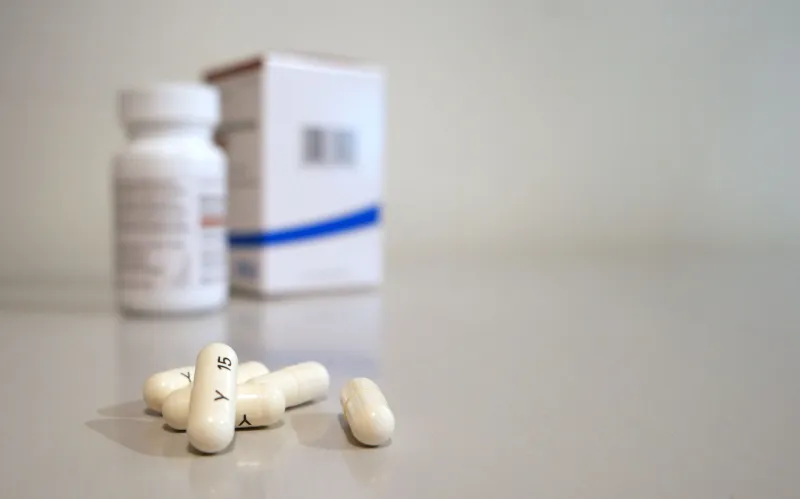
Same Pill, Different Price: Navigating America's Prescription Discount Maze
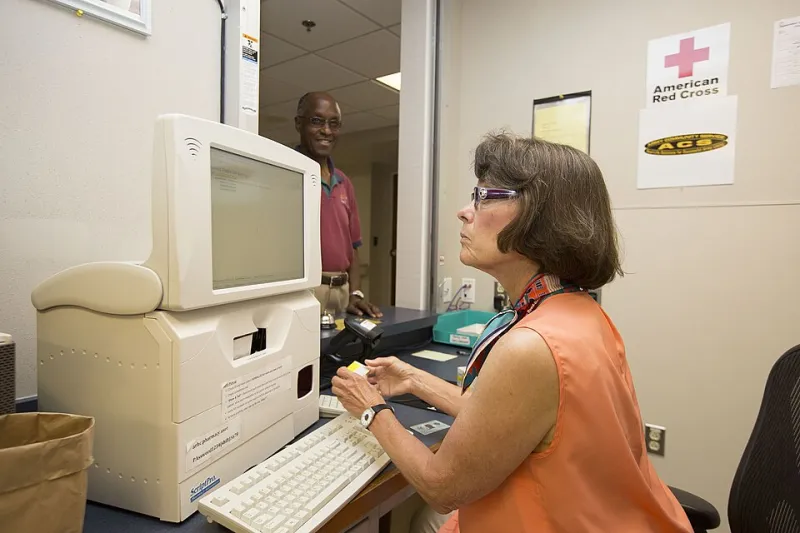
Photo: Damien Salas, Public domain, via Wikimedia Commons
Ask two neighbors what they pay for the same generic medication, and you may hear two wildly different numbers. One person pays $10.80 at a warehouse club; the other hands over $95 at a pharmacy two blocks away. Nothing about the drug changed — only the transaction.
In the United States, prescription pricing is not a fixed sticker on a shelf. It is a shifting landscape of cash prices, insurance copays, discount cards, and chain-specific generic programs. Understanding that landscape is not just a matter of saving money. When a drug becomes unaffordable, patients skip doses, cut tablets in half, or abandon prescriptions entirely — decisions with real clinical consequences.
Why the Same Drug Has a Dozen Prices
Pharmacies do not charge one universal price. Each chain negotiates its own acquisition costs, sets its own cash margins, and contracts separately with insurers and pharmacy benefit managers. A generic that wholesales for pennies may be listed at $40 cash at one counter and $6 at another, purely because of how each retailer has chosen to price it.
Compounding the confusion, your insurance copay is not always the lowest available price. A copay of $25 for a generic can be beaten by a $10 cash price with a discount card — but pharmacy systems will not automatically apply the cheaper option unless you ask.
The Chain Generic Programs, Explained
Several major American retailers maintain discounted generic formularies, historically popularized by Walmart's well-known low-cost list. The details matter more than the marketing:
- Coverage is selective. These lists typically include a few hundred common generics — blood pressure medications, statins, antibiotics — but exclude newer or brand-name drugs.
- Pricing tiers exist. Many programs charge a flat fee for a 30-day supply and a larger flat fee for 90 days, with the 90-day option usually offering the better per-pill value.
- Membership may be required. Some retailers fold these prices into paid membership programs; others offer them to anyone with a prescription.
The practical step is simple: ask whether your specific drug and dose appear on the pharmacy's discounted generic list before assuming your copay is the best deal.
Manufacturer Coupons and Patient Assistance
For brand-name medications, the manufacturer itself is often a resource. Copay cards, available on many drug company websites, can reduce out-of-pocket costs substantially for commercially insured patients. Two caveats deserve attention:
- Federal law prohibits manufacturer copay coupons for Medicare and Medicaid beneficiaries in most circumstances, a rule designed to prevent improper cost-shifting.
- Coupons can raise long-term costs. By keeping patients on pricier brand drugs, copay cards may increase overall insurance premiums. For an individual household, however, the immediate savings are often decisive.
For uninsured and underinsured patients, patient assistance programs — some run by manufacturers, others by nonprofits — may provide medications free or at reduced cost based on income eligibility. Application paperwork is tedious but frequently worthwhile.
Discount Cards and Price-Comparison Tools
Third-party discount services negotiate reduced cash prices with pharmacies and pass part of the savings to consumers. These tools are free to use and can be compared across pharmacies in minutes.
A few rules of thumb:
- Always compare the discounted cash price against your insurance copay, and choose whichever is lower. You are generally permitted to pay cash with a discount rather than run the claim through insurance.
- Prices vary by pharmacy and even by ZIP code, so check multiple locations, including supermarket and mail-order pharmacies.
- Discount prices typically cannot be combined with insurance claims, so pick one route per prescription.
A Realistic Scenario
Consider a patient picking up atorvastatin, one of the most prescribed generics in the country. Her insurance copay: $18. Her pharmacy's 90-day generic program price: $12. A discount card quote at a competing supermarket pharmacy: $7 for 30 days. None of these options changes the drug, the dose, or the manufacturer. The only variable is which pathway she requests at the counter.
Ask Before You Switch or Skip
Cost-saving strategies should never involve altering a regimen on your own. Before splitting tablets to stretch a supply or skipping fills, speak with your pharmacist or prescriber. There is almost always a legitimate route to a lower price — a 90-day fill, a therapeutic generic alternative, a discount program, or an assistance application.
The prescription you can afford is the one you will actually take. In American healthcare, that affordability is often hiding in plain sight, a few questions away from the counter.